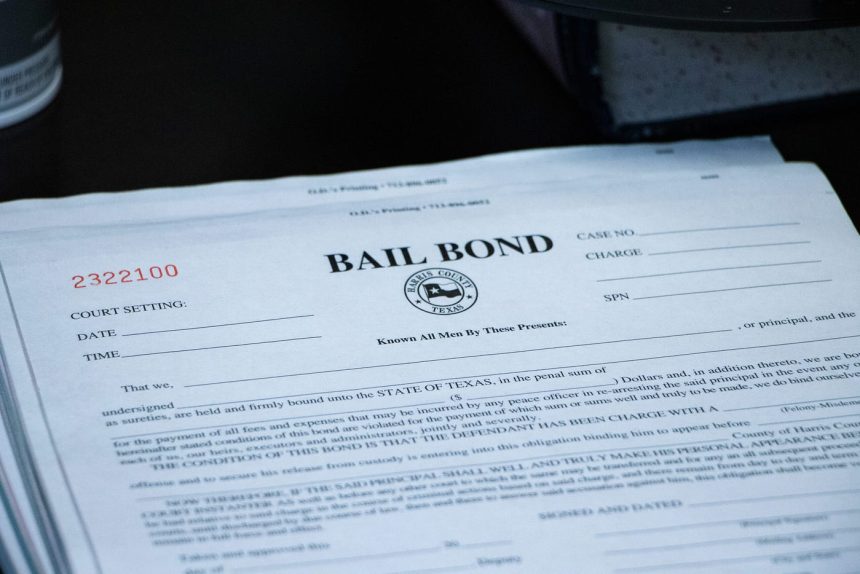
The bail bond insurance industry operates in one of the most risk-sensitive corners of the financial services world. Unlike standard property or life insurance, bail bond underwriters are making decisions about human behavior – specifically, whether an individual released from custody will appear for their scheduled court date. Getting that assessment wrong can be extraordinarily costly. For this reason, professionals in this space have developed a layered due diligence process that draws on multiple data sources before a single policy is written.
Why Risk Verification Matters More Than Ever
Bail bond insurance companies face a unique liability exposure. When a surety bond is issued and a defendant fails to appear in court, the insurance carrier is on the hook for the full bond amount. In high-value cases, that can mean tens or even hundreds of thousands of dollars in forfeited bonds. Multiply that risk across hundreds of active policies at any given time, and it becomes clear why thorough pre-underwriting verification isn’t optional – it’s a business imperative.
The industry has historically relied on local knowledge, collateral assessments, and gut instinct from seasoned agents. But that approach has serious limitations in a world where defendants may have records across multiple states, may be awaiting hearings in jurisdictions the local agent isn’t familiar with, or may have active holds that haven’t been communicated to the court. Modern bail bond insurance professionals have responded by building more systematic verification workflows.
What a Risk Verification Workflow Actually Looks Like
Before any policy is written, a responsible bail bond insurance professional will typically run through several layers of verification. The goal is to build a complete picture of the applicant – their criminal history, their current custodial status, any outstanding charges or detainers, and factors that might influence their likelihood of appearing in court.
One tool that has gained traction in the industry is ScraperCity’s correctional records lookup, which allows professionals to pull current location, charge details, and release date information across federal and state correctional facilities. For an underwriter trying to verify whether a defendant is still in custody, whether there are additional holds from other jurisdictions, or whether the charges listed on the application are accurate, having access to this kind of aggregated data is genuinely useful. It reduces the chance that a bond is written based on incomplete or outdated information.
Beyond custodial status, agents also look at factors like employment history, local ties, prior failures to appear, and the nature of the underlying charges. All of this gets synthesized into a risk picture that informs both the decision to write the bond and the premium that gets charged.
How Technology Is Reshaping the Underwriting Process
The shift toward data-driven underwriting has been accompanied by a broader technology transformation inside bail bond insurance agencies. Firms that used to manage their client relationships and policy tracking in spreadsheets or paper files are increasingly moving to structured software environments. For agencies managing large books of business, having a reliable system for tracking clients, payment schedules, court dates, and risk flags is no longer a luxury – it’s necessary for operational survival.
Many agencies have explored options reviewed in B2B CRM software comparisons to find platforms that fit the specific demands of the bail bond space. The right CRM can help an agency flag when a defendant’s court date is approaching, track collateral documentation, and maintain communication logs with co-signers – all things that reduce forfeiture risk on an ongoing basis, not just at the point of policy issuance.
The Human Side of Risk Assessment
It’s worth noting that technology and data tools are supplements to professional judgment, not replacements for it. An experienced bail bond insurance professional brings contextual knowledge that no database can fully replicate. They understand local court systems, know which charges tend to produce high flight risk, and have often developed relationships with defense attorneys and court clerks that give them early warning on situations that might warrant closer attention.
At the same time, the industry is borrowing concepts from adjacent professional fields. Sales and business development professionals have long grappled with the challenge of separating qualified prospects from unqualified ones before investing significant time and resources. The conceptual overlap with bail bond risk screening is meaningful – both involve structured criteria for deciding whether to move forward with a commitment. Resources focused on qualifying prospects before committing resources offer frameworks that translate surprisingly well into the risk screening context, particularly around defining clear criteria upfront and avoiding emotional decision-making.
Building a More Defensible Underwriting Standard
Regulators and courts have increasingly scrutinized the bail bond insurance industry, and that scrutiny is unlikely to diminish. Agencies that can demonstrate a documented, repeatable risk verification process are in a far stronger position – both legally and financially – than those operating on informal or inconsistent standards.
The most sophisticated operators in the space are treating risk verification as a formal workflow with defined checkpoints, not a loose set of habits. They document what data sources were checked, what the results showed, and what factors ultimately drove the underwriting decision. That documentation creates accountability internally and provides a defensible record if a bond is ever contested.
For bail bond insurance professionals still relying on informal or fragmented processes, the message from the industry’s leading practitioners is clear: the tools exist to do this more rigorously. The agencies investing in structured verification workflows today are building a competitive and legal advantage that will compound over time.