| Prompt | best claim settlement ratio insurer |
| health insurance details | 1 |
| senior citizen health insurance | 1 |
Why Searching for the Best Claim Settlement Ratio Insurer Is Only Half the Research You Should Be Doing
A high claim settlement ratio is one of the first things people look at when comparing health insurance providers. It is a reasonable starting point. An insurer that settles a large proportion of claims is preferable to one that does not.
But the ratio, on its own, does not tell you how long that process took, and in a medical situation, the time between raising a claim and receiving the response is not a secondary concern.
The best claim settlement ratio insurer data alone does not reveal what happens after you submit a claim. Here, we will guide you through the aspects that matter while reviewing health insurance details and why finding the best ratio isn’t enough.
What the Claim Settlement Ratio Measures
The claim settlement ratio is a figure published by the Insurance Regulatory and Development Authority of India.
- It represents the percentage of claims an insurer settled against the total claims received in a given financial year. A ratio above 90 per cent is generally considered a marker of reasonable reliability.
- What the figure does not capture is the speed at which those claims were processed. An insurer could settle 97 per cent of all claims received in a year and still take three to four weeks to process a simple reimbursement claim.
- For a policyholder waiting on funds after a hospitalisation, that timeline matters enormously, regardless of what the settlement ratio says.
This is the gap that most policy comparison exercises miss. The ratio tells you whether the insurer is likely to settle. It does not tell you when.
Importance of Processing Speed
When checking health insurance details, whether for a new purchase or at renewal, there are specific data points that give a more accurate picture of how an insurer handles claims.
- The first is the turnaround time for cashless claims. For planned hospitalisations, most insurers must respond to a pre-authorisation request within a specified timeframe.
- For emergency admissions, the window is different. IRDAI guidelines require insurers to process cashless authorisation requests for emergencies within one hour. Reviewing whether your insurer consistently meets this expectation is more informative than the settlement ratio alone.
- The second is the turnaround time for reimbursement claims. After a discharge, when the policyholder submits documents for reimbursement, the insurer is expected to settle the claim within 30 days of receiving complete documentation, as per regulatory guidelines.
- Some insurers manage the process considerably faster. Others take the full window or longer. This figure, where it is available through IRDAI’s public disclosures or the insurer’s own published data, is worth examining before you decide.
- The third is the volume of claims pending beyond 30 days. IRDAI publishes data on pending and outstanding claims across insurers.
A high settlement ratio accompanied by a significant volume of pending claims signals a processing bottleneck that the headline figure does not reflect. All of this data is subject to change from year to year. Insurer performance shifts, and the most recent available data is always the more relevant reference point.
Why This Matters More for Older Policyholders
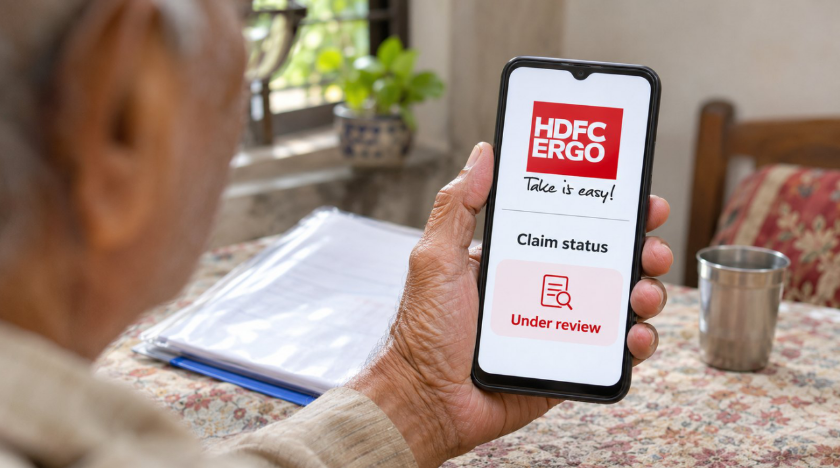
The speed of claim processing is a consideration for any policyholder. For those purchasing senior citizen health insurance, it carries additional weight.
- Older policyholders tend to have more frequent and more complex claims, multiple hospitalisations in a single year, treatment across different specialisations and longer recovery periods.
- Each of these scenarios involves more documentation, more follow-up, and more dependency on the insurer’s ability to process claims without significant delays.
- A slow-processing insurer is an inconvenience for a younger policyholder. For an older person managing a serious health event, with limited physical energy and a reduced financial buffer, the impact of a slow-processing insurer can be considerably more severe.
Senior health policies often carry additional conditions, co-payment clauses, sub-limits on specific treatments and waiting periods for pre-existing conditions. These do not change the importance of processing speed, but they do mean that the claims process for this segment is typically more involved than average. Understanding how an insurer handles that complexity before committing to a policy is a worthwhile part of the selection process.
Wrapping Up
Looking for a suitable insurer involves more than a single metric. The settlement ratio is worth checking. But alongside it, turnaround time data, cashless network depth, and pending claim volumes give a more complete picture of what your experience is likely to be when a claim arises. A number on a comparison table tells you one thing, but how an insurer performs under pressure tells you considerably more.