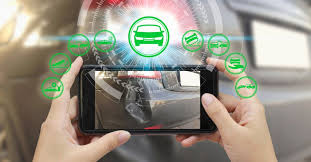
The end-to-end assessment of damage from a claim starts at the First Notice of Loss (FNOL) and continues through damage evaluation, cost estimation, fraud detection, and settlement approval. Insurers increasingly rely on intelligent automation to manage this lifecycle efficiently, and the introduction of AI Vehicle Damage Detection has fundamentally reshaped how claims are assessed, validated, and resolved. By embedding intelligence across the entire process, insurers can achieve high levels of straight-through processing, significantly reduce claim cycle times, and maintain consistent accuracy while complying with regulatory standards. This unified approach eliminates fragmented manual workflows, ensures data consistency across stages, and builds long-term customer confidence by delivering faster and more reliable outcomes.
What Is End-to-End Claims Damage Assessment?
End-to-end claims damage assessment represents a fully integrated digital pipeline designed to manage every component required to assess damages accurately and efficiently. This encompasses systematized capturing of damage-related information and records, automatic analysis of data and validation of proofs, estimation of costs, screening of frauds, and integration of workflows throughout the claims monthly. The whole process is an intelligence-driven flow, as opposed to isolated systems, or individual reviews by humans.
Structured intelligence is transferred smoothly through every tier between the time a policyholder presents photographs or documents at FNOL and through to the settlement approval. All decisions are based on previous inputs and this results in a closed loop structure where previous knowledge is reused and upgraded whenever new information arises. This will make sure that the claims are not considered separately at each stage but rather constantly reconsidered with the entire context of the claim.
The end-to-end model also eliminates manual processes that are fragmented, i.e., isolated estimates, separate inspections, and delayed reviews in favor of a single dynamic workflow. The system is more adaptable to the increasing complexity or the introduction of new evidence in real time, with new validations and decision logic. This enables the insurers to handle the entire claims lifecycle in the same way as minimizing errors and operational inefficiencies.
What AI does to change the End-to-End Claims Damage Assessment?
The artificial intelligence brings intelligence on all levels of the claims damage assessment procedure and allows claims to be handled in real time and not through gradually increasing, sequential handoffs. Rather than one task being performed before the others, AI enables simultaneous assessment, verification and decision-making throughout the workflow.
AI eliminates manual reviews and disjointed data sources through generating actionable insights on intake via settlement to remove bottlenecks. Triage, assessment and routing of claims may be done dynamically according to severity, complexity and risk and so the easy stuff can be solved within a short period and those that are complex enough can be handled by the right degree of expert attention.
AI in FNOL & Claims Intake
Intelligence based on AI originates at the initial level of contact with the customer. The moment the images or videos have been uploaded in the course of FNOL, automated assessment of the quality of submissions will take place, and early damage assessment will be activated. Guided capture interfaces provide optimal angles, light and coverage, less rework and better assessment accuracy.
Initial severity scores are created virtually on the spot, and this enables the insurers to establish realistic expectations with policyholders at the very beginning of the process. The claims are categorized in the suitable categories whether minor, major, or possible total loss and directed as such. The high risk claims that have disputes, injuries, or more than one asset are upgraded with a summarized background so that quicker and more informed decisions can be made.
Damage Classification and Identification AI.
The damage identification and classification is based on computer vision engines, which provide a high level of precision in the analysis of vehicles, property, and equipment. These models identify and define the type of damage as dents, cracks, scratches, broken glass and structural deformation with a high level of accuracy.
Damage data is overlaid onto individual components, permitting these to be correlated with standard asset models and past standards. Edge processing can be done on-site in real time whereas more complex cases are forwarded to cloud systems to be evaluated. The model is constantly trained on new large datasets, so the models are updated to new vehicle models, materials, and regional damage distributions as time passes.
AI-Based Cost of Repairs Pricing.
In addition to the damage recognition, AI creates comprehensive repair cost estimates that are just as good as the ones prepared by licensed appraisers. Predictive models use the historical data on claims, labor times, parts pricing, and paint requirements in order to generate valid, defensible estimates.
Live connection to parts databases will make sure that their prices and availability are up to date with the market. The new claims are automatically compared to historical payouts to avoid overpayments and recognize anomalies that can be evidence of inflated estimations and unnecessary repairs. The automation is a high degree of automation that makes pricing errors minimal and costs are also highly controlled in high volumes of claims.
Artificial Intelligence in Fraud Detection in Damage Claims.
Complex forensic intelligence has been integrated into the damage assessment process itself, involving fraud detection. The signs of manipulation are detected through image analysis, occurring pixel irregularities, tampered metadata, and lighting abnormalities. Patterns of damage are matched with reported loss causes and external databases, e.g., weather records, to find discrepancies.
The suspicious activities such as repeat filings of claims and organized fraud networks are detected by graph-based analytics and anomaly scoring. The use of multi-angle reconstruction also reveals any damage that might be there beforehand so that only the legitimate losses should be recompensed.
AI on Claims Transparency and Documentation.
Explainable visual output enhances the transparency as there is a clear communication of decision making procedures. Visual evidence of the extent and level of damage is in the form of annotated images, heat maps, and before-and-after comparisons. Any decision made by AI is recorded, leaving unaltered digital audit trails that aid in compliance with the regulations and internal controls.
Confidence scores and specified human override paths will allow the adjusters to maintain expert control when needed, and explainable decision logic will be effective in building trust among the stakeholders. The support of compliance requirements is achieved with the help of the structured documentation that traces the decision provenance and bias observation during the claims process.
Automation of Claims Workflow with AI.
The ability to orchestrate workflows with a unified workflow will do away with manual file routing and disconnected systems. Dynamically routed claims are by severity, risk of fraud and complexity, which minimizes manual touch points and speedy resolution. High-confidence assertions are processed automatically resulting in immediate payment of the funds electronically and the complicated cases are referred accordingly.
Existing operations are not interrupted since pre-built connectors attach with the core claims platforms. It allows insurers to manage the peaks in claims without a commensurate rise in staff strength to ensure that service is not reduced during cat events or seasonal peaks.
Why A3Logics
A3Logics provides premium-level Insurance Software Development Services, which are technically excellent yet highly knowledgeable about the insurance domain. Its platforms combine FNOL, detection, estimation, fraud analysis, and settlement to one unified workflow. It has proven reliability in thousands of parts and types of assets to deliver the same result on automotive, property and equipment claims.
Fast deployment schedules, sophisticated fraud intelligence and well-developed MLOps practices mean that solutions are accurate and scalable in the long run. Constant monitoring, retraining and performance optimization enable the insurers to be adjusted to the changing market conditions and realise quantifiable decrease in fraud, cycle time and costs of operation.
Final Takeaway
The fragmented and manual claims processes are turned into smart, automated, and constantly improving processes with the help of AI. Through intelligence implantation in the intake, assessment, estimation, fraud detection, and settlement, insurers are able to achieve speed, accuracy, and scalability resilience.
When implemented as part of a broader AI Insurance Claims Processing strategy, end-to-end damage assessment delivers superior customer experiences, stronger fraud prevention, enhanced regulatory compliance, and sustainable competitive advantage. Insurers that successfully adopt this model position themselves as leaders in the era of intelligent, data-driven claims management.