Talking about La Liga teams that “focus on low zonal defence” is really asking which sides build their game around deep, compact blocks rather than aggressive pressing or high lines. That choice shapes not only how few goals they concede but also how matches against them look, how opponents must attack, and where betting markets often misread tempo and scoring potential.
What “Low Block” Really Means in Modern La Liga
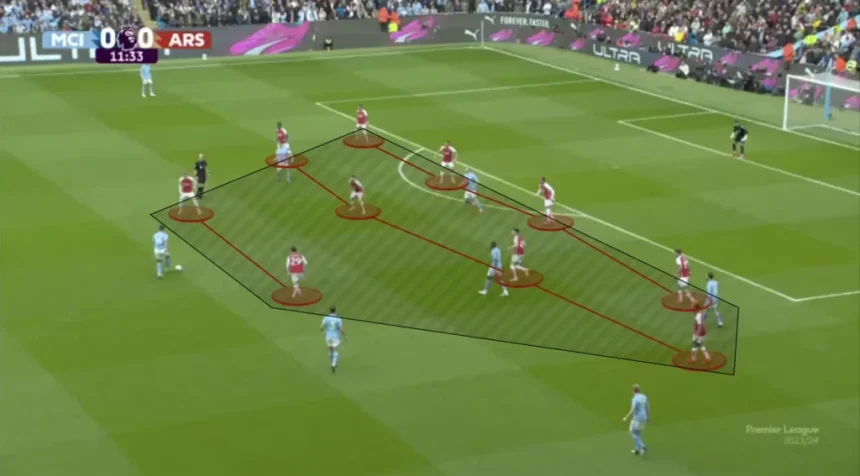
A low block is not just parking ten players in the box; it is a coordinated structure where the defensive and midfield lines sit deep in their own half, compressing space between them. The primary aim is to protect the penalty area, close central lanes, and force opponents to circulate the ball around the outside rather than playing directly through dangerous zones. In La Liga, this often means narrowly spaced back fours or fives screened by a compact midfield, with clear rules about when to step out and when to delay.
Recent tactical surveys across Europe note that more teams in La Liga now use low blocks as one option within a flexible defensive toolkit rather than as a fixed ideology. Coaches weigh the trade-off between conceding territory and preserving structural stability, dropping deeper when protecting a result or facing technically superior opposition. The result is a league where “low block teams” are less about permanent labels and more about sides that reach for a deep, zonal shape more frequently and more intentionally than others.
Which Teams Currently Embody Deep Defensive Priorities?
Different sources highlight a cluster of La Liga clubs that deliberately prioritize low, compact defending to survive against possession-dominant giants. Reports from the 2025–26 season point to outfits such as Alavés and Getafe as clear examples of sides that rely on well-organised low blocks and counter-attacks, framing defence-first tactics as a survival strategy. Their matches often feature limited open-play chances conceded, with the trade-off of modest attacking volume until countering opportunities arise.
At the higher end of the table, Atlético Madrid remain a reference point for low-block excellence under Diego Simeone, even as they mix phases of more proactive pressing. Historical and contemporary analyses describe how Atlético’s narrow 4-4-2 defends deep, keeps centre-backs close together, and invites opponents to cross from wide areas rather than playing through central spaces. Current defensive tables show Atlético, Real Madrid, and Villarreal among the teams conceding the fewest goals in La Liga 2025–26, underlining how sustained compactness and penalty-box protection translate into low goals-against tallies.
Structural Traits That Define Low-Block La Liga Sides
Low-block La Liga teams share recurring structural traits even when formations differ on paper. Defensively, they prioritize horizontal compactness—keeping distances between defenders small to close gaps for through balls and cutbacks—and vertical compactness, reducing space between midfield and defence so attackers cannot receive freely between lines. This structure aims to delay attacks, funnel play wide, and contest aerial deliveries where centre-backs and goalkeepers feel more comfortable.
In possession, these sides usually adopt simple, lower-risk build-up patterns, often bypassing prolonged central combination play in favour of direct passes into target forwards or fast wide players. The intention is to avoid turnovers in dangerous zones and to turn recovered balls into quick transitions before the block needs to reshuffle. Over time, this combination of deep defence and direct countering tends to reduce both total match shot volume and the proportion of high-quality chances conceded from central zones.
How Low Blocks Differ From Mid-Blocks in Practice
Mid-blocks and low blocks can look similar superficially, but their mechanics diverge in specific ways. Mid-blocks usually set the defensive line around the middle third, applying controlled pressure to prevent easy progression while still maintaining some threat of counter-pressing. Low blocks, by contrast, withdraw much closer to their own area, sacrificing pressure on early build-up in order to protect the final third more aggressively.
In La Liga, many teams now slide between these states situationally—dropping into a low block when protecting a lead or facing sustained pressure, then stepping into a mid-block when chasing the ball higher becomes necessary. What marks certain clubs out as “low-block oriented” is not that they never press, but that their baseline risk calculation tends to favour deeper positions and compactness over frequent high pressing, particularly against stronger opponents.
Tactical and Statistical Impact of Deep Zonal Defence
Consistent use of deep, compact blocks shows up in both qualitative observations and quantitative metrics. Defensively, low-block teams tend to concede fewer big chances from central zones, with many opponent shots coming from distance or from wide crossing situations. Goal-conceded tables for La Liga 2025–26 support this pattern, with Atlético and Real Madrid tying for the fewest goals allowed in the league, while other structurally disciplined sides cluster toward the low end of the goals-against spectrum.
However, these teams often accept lower possession shares and fewer attacking touches in the final third as a consequence of their approach. Tactical analyses note that opponents with elite technicians—particularly top clubs used to breaking blocks—can still generate sustained pressure, even if they find central gaps harder to access. When a low-block team cannot transition cleanly or hold the ball well enough to relieve pressure, the volume of defending required can eventually lead to fatigue-driven errors late in matches, partially offsetting the initial structural advantages.
Pre-Match Analysis: Reading Low-Block Teams Before Kickoff
From a pre-match perspective, recognizing low-block oriented La Liga sides helps set realistic expectations for tempo, shot patterns, and scoring probability. Fixtures where a possession-dominant favourite meets a deep, compact opponent often produce territorial dominance for the favourite, with many shots but relatively few truly clean central chances until structural cracks appear. In that context, early goals become especially pivotal; if the underdog concedes early, it may be forced to abandon the low block, transforming the match into a more open, transitional contest.
Analysts can also factor in how specific favourites have historically fared against deep defences. Comments from players and coaches acknowledge that some technically gifted teams struggle more against well-organised low blocks than against high pressing, because they find less space between lines and behind the defence. When those stylistic mismatches persist over time, they explain why certain matchups underperform goal expectations, even when one side has far superior individual talent and big pre-match odds.
Example Table: Archetypes of Low-Block-Heavy Matchups
To make these ideas more concrete, it helps to think in terms of matchup archetypes, particularly when one team leans heavily on a low block.
| Matchup type | Likely game pattern | Impact on chances and goals |
| Technical giant vs pure low-block team | Territory dominance, patient probing | Many shots, fewer clear central chances, late goals |
| Mid-table passer vs compact underdog | Slower tempo, selective counter-attacks | Moderate shots, high value on transitions |
| Two low-block-oriented teams | Deep shapes on both sides, long phases of stalemate | Low event density, set pieces become decisive |
| Flexible favourite vs adaptive low block | Shifting pressure and height over 90 minutes | Mixed phases, outcome hinges on in-game adjustments |
Interpreting specific La Liga fixtures through this table helps explain why some “easy on paper” games turn into attritional battles, while others open up once the low-block side is forced to chase the score. It also highlights how much of the attacking output and goal count hinges not just on quality but on how each coach chooses to balance risk and territory.
Integrating Low-Block Knowledge Into a Web-Based Service View (UFABET Paragraph)
When these tactical patterns enter a betting environment, the level of detail provided about defensive style and chance quality matters more than raw possession numbers. In a web-based service that breaks down expected goals, shot locations, and goals conceded by type, users can move beyond “this team defends a lot” toward “this team specifically funnels opponents into low-probability wide attempts and lives off transitions.” Under that lens, someone analysing La Liga through เว็บสล็อต ufa168 could treat low-block teams as a distinct category: checking whether markets for totals, handicaps, and shot counts properly account for slow tempo, dense penalty-box protection, and reliance on counters, and then adjusting expectations when news, formations, or opponent profiles suggest the deep block may be more or less sustainable on a given weekend than historical averages alone imply.
Where Low-Block Strategies Struggle or Fail
Low blocks are not an automatic path to defensive stability. Without intense concentration and repeated training, deep shapes can become passive, leading to static lines that neither press the ball nor protect cutback zones effectively. In those cases, opponents simply accumulate attacks until rebounds, second balls, or deflected shots finally break through, turning “defence-first” into prolonged, risky survival rather than controlled containment.
Another failure mode emerges when attacking transitions are too weak to threaten opponents. If a low-block team consistently gives the ball back cheaply, it invites wave after wave of attacks, making fatigue and late concessions far more likely. Over a season, that pattern shows up as poor late-goal records and low point returns from winning or drawing positions, undermining the supposed advantages of the low block and pushing clubs either toward tactical evolution or toward the relegation battle.
How casino online Framing Skews Perception of Deep Defensive Sides
Digital gambling environments influence how people think about low-block teams by the way they frame statistics and highlight packages. When a casino online website emphasizes goal-heavy fixtures and attacking highlights, it can make deep-defending sides appear inherently “boring,” encouraging users to underestimate the volatility that still exists in matches where a single structural lapse or set piece can change everything. The absence of glamorous attacking clips does not mean these teams are predictable; it simply means their impact shows up more in suppressed shot quality and timing of counters than in constant box entries.
To counter this framing, tactically minded users should seek out data on goals conceded, shot maps against, and opponent shot quality rather than relying solely on reputations. Current statistics showing Atlético Madrid, Real Madrid, and Villarreal tied for some of the lowest goals conceded in La Liga demonstrate how disciplined blocks can quietly dominate defensive tables even when their matches do not feature constant action. Understanding that defensive suppression is a positive skill, not just a lack of spectacle, helps recalibrate expectations and keep assessments grounded in structure rather than in highlight-driven impressions.
Summary
In La Liga 2025–26, teams that focus on deep zonal defending—ranging from survival-minded sides like Alavés and Getafe to elite practitioners like Atlético Madrid—use low blocks as calculated tools to protect central spaces and force opponents into lower-quality chances. Tactical studies and defensive tables show that this compactness, when executed with discipline and paired with coherent transitions, can keep goals conceded among the league’s lowest, even as flexible blocks and adaptive pressing become more common across Spain. At the same time, low blocks remain vulnerable when they drift into passivity or when attacking outlets fail, reminding analysts and bettors that “defence-first” is not a fixed identity but an ongoing judgement about how far a team can trade territory for stability without inviting the very pressure it hopes to survive.