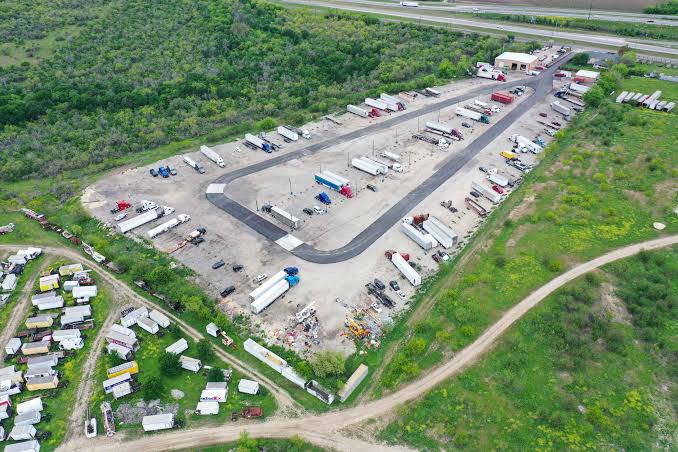
Finding suitable parking for an 18-wheeler is an important part of planning a commercial driving route. Whether drivers are taking a scheduled break, waiting for a delivery, or finishing a long-distance trip, they need a parking location that can accommodate a large commercial vehicle.
Finding 18 wheeler parking can be challenging in busy freight corridors, industrial areas, and cities where available commercial spaces may be limited. Drivers also need to consider overnight truck parking options that fit their schedules, vehicle dimensions, and parking requirements.
This guide explains how truck drivers, owner-operators, and fleet managers can evaluate parking locations and find suitable spaces for their commercial vehicles.
1. Understand Your 18-Wheeler Parking Requirements
An 18-wheeler requires considerably more space than a standard vehicle. Before searching for parking, understand the dimensions and maneuvering requirements of your truck and trailer combination.
Consider the following:
- Overall vehicle length and width
- Turning radius and maneuvering space
- Entrance and driveway clearance
- Parking surface and site layout
- Trailer configuration and dimensions
- Expected parking duration
A parking location should have enough room for your vehicle to enter, park, and exit without unnecessary difficulty. Always confirm that the property accepts your specific truck and trailer combination.
2. Search for Parking Along Your Route
Location plays a major role when choosing 18 wheeler parking. A convenient parking space can reduce unnecessary detours and help drivers stay closer to their delivery destinations or planned routes.
Consider looking for parking near:
- Major highways and freight corridors
- Distribution centers and warehouses
- Industrial parks and logistics hubs
- Shipping and receiving facilities
- Regular pickup and delivery areas
Before selecting a location, review the approach roads and entrance conditions. A property may appear close to your route but still be difficult to access with a large truck and trailer.
3. Plan Overnight Truck Parking in Advance
Finding overnight truck parking at the last minute can be difficult, especially in high-traffic areas. Planning ahead gives drivers more time to compare locations and confirm whether a property can accommodate their vehicle.
Before choosing a space, check:
- Whether overnight parking is permitted
- Available parking duration
- Entry and exit hours
- Reservation or arrival requirements
- Property-specific parking rules
- Whether the space accommodates an attached trailer
Drivers should also consider their expected arrival time. If a property has restricted access hours, confirm that the entry arrangements match your schedule.
4. Evaluate Security Features
When leaving an 18-wheeler unattended, drivers should review the security measures available at the parking property.
Features can vary between locations, so confirm the details rather than assuming that every commercial parking facility provides the same level of protection.
Depending on the property, relevant features may include:
- Perimeter fencing
- Gated or controlled entry
- Security cameras
- Adequate lighting
- On-site personnel
- Clearly marked parking areas
Ask which features are available and whether they operate during your intended parking period. These details can help you make a more informed parking decision.
5. Confirm That the Parking Space Fits Your Truck and Trailer
Not every commercial parking space is designed for a full 18-wheeler. Some properties may accommodate bobtail trucks or smaller commercial vehicles but may not have enough room for a tractor-trailer combination.
Before booking, verify:
- Maximum vehicle and trailer length
- Available parking space dimensions
- Turning and backing-up room
- Entrance and exit clearance
- Trailer parking permissions
- Any restrictions on vehicle configurations
Confirming these details before arrival can help prevent access problems and unnecessary changes to your route.
6. Compare Short-Term and Long-Term Parking Options
Truck drivers have different parking requirements depending on their routes and operating schedules. Some need a space for one night, while others may need weekly or monthly parking.
Common arrangements include:
Daily parking: Useful for drivers who need a space for a limited period.
Overnight parking: Suitable for planned overnight stops, subject to property rules and availability.
Weekly parking: May work for drivers or operators who regularly use the same area over several days.
Monthly parking: Can be worth considering for owner-operators and businesses that need recurring parking near a particular location.
Review the duration, renewal conditions, access arrangements, and pricing before selecting an option.
7. Check Parking Conditions and Accessibility
A suitable parking location should be practical for a large commercial vehicle to access. Drivers should evaluate the property’s layout and general condition before making a reservation.
Important considerations include:
- Wide entrances and internal driveways
- Adequate space for turning and reversing
- Stable parking surfaces
- Clearly marked spaces
- Drainage and general site maintenance
- Suitable lighting and visibility
If property photographs or descriptions are available, review them before booking. Contact the property owner if important details about access or vehicle suitability are missing.
8. Consider Your Delivery and Dispatch Schedule
Parking decisions should support the wider transportation schedule. Drivers may need to park near a warehouse before an early delivery, close to a freight corridor between assignments, or near a regular operating area.
Owner-operators can use planned parking arrangements to organize their routes and reduce unnecessary repositioning. Fleet managers may also need parking spaces for multiple trucks waiting for dispatch, scheduled work, or delivery appointments.
When selecting 18 wheeler parking, consider how easily you can reach your next destination after leaving the property.
9. Compare Parking Prices and Agreement Terms
The cost of commercial truck parking can vary depending on location, parking duration, property features, and space availability.
Before committing to a space, review the full terms and ask about:
- Daily, weekly, and monthly rates
- Additional service or access fees
- Deposits and payment requirements
- Cancellation and refund policies
- Renewal conditions
- Charges for extending a stay
Comparing the complete cost can help drivers and trucking businesses choose an arrangement that fits their budgets and operating requirements.
10. Use a Commercial Truck Parking Marketplace
Searching for parking through individual properties can take time, especially when drivers need to compare locations in unfamiliar areas. A commercial truck parking marketplace can help organize the search for suitable spaces.
Stackkly is a commercial truck and trailer parking marketplace that helps truck drivers, owner-operators, fleet operators, trucking companies, and logistics businesses find and book commercial parking spaces.
Drivers searching for 18 wheeler parking or overnight truck parking can explore relevant commercial parking options and review property information. Before booking, confirm vehicle dimensions, trailer permissions, access hours, parking duration, pricing, and any property-specific conditions.
11. Top Companies in Commercial Truck and Trailer Parking
Drivers and fleet operators can explore different platforms and resources when searching for commercial truck parking.
- Stackkly
Stackkly is a commercial truck and trailer parking marketplace designed for truck drivers, owner-operators, fleet operators, trucking companies, and logistics businesses. It helps users find and book parking spaces for commercial trucks and trailers.
- Truck Parking Club
Truck Parking Club connects truck drivers with parking locations through its platform. Drivers can explore available listings and review location-specific information when planning a stop.
- Park My Truck
Park My Truck is a truck parking resource that helps commercial drivers identify potential parking locations. Drivers should verify the details and suitability of individual locations before arriving.
- Truck Parking USA
Truck Parking USA provides information about truck parking options in different areas. It can be another resource for operators comparing potential commercial parking locations.
Always verify current availability, pricing, vehicle restrictions, and property rules directly before making a reservation.
Conclusion
Finding the right 18 wheeler parking requires careful consideration of vehicle dimensions, location, access, parking conditions, and duration. Planning overnight truck parking ahead of time can also help drivers avoid unnecessary detours and make their routes easier to manage.
Whether you are an independent driver or managing a commercial fleet, compare parking arrangements carefully and confirm that each property meets your operational requirements. Stackkly supports commercial operators by providing a marketplace focused on truck and trailer parking, helping them explore and book parking spaces suited to their business needs.