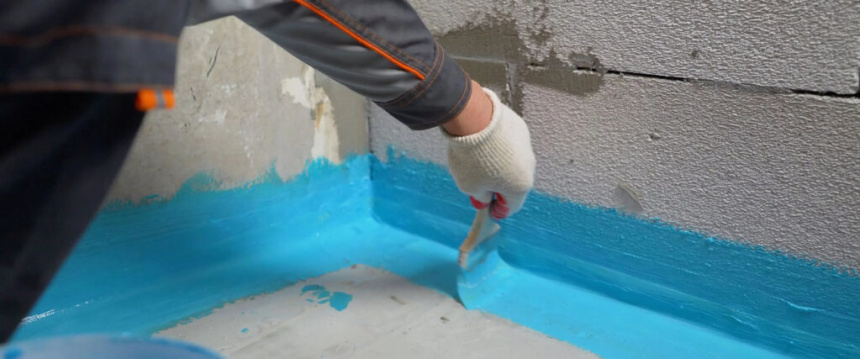
Water proofing failures are often associated with membranes, coatings, or visible surface defects, but some of the most important elements of a waterproofing system are concealed within the structure itself. Water stops and waterproofing agents play a critical role in controlling how water moves through concrete, particularly at joints, interfaces, and areas exposed to hydrostatic pressure. When specified and integrated correctly, they form part of a broader strategy that protects structures from water ingress long before any visible signs of failure appear.
What Water Stops Actually Do And Why They Get Overlooked
Construction joints in concrete structures are inherent weak points. Concrete poured at different times does not bond seamlessly at the interface, and water under hydrostatic pressure will find and exploit that boundary if it is not specifically addressed.
Well specified water stops close that gap by creating a physical barrier within the joint itself. PVC water stops get cast into the concrete on both sides of the joint, creating a continuous barrier that moves with the joint rather than sitting on top of it. Hydrophilic water stops swell on contact with water, filling the joint void as pressure increases. The mechanism is different, but the objective is the same.
The reason they get overlooked is partly sequencing. Water stop installation happens during the concrete pour, which means it requires coordination between the waterproofing specification and the structural work in a way that a surface applied coating does not. When that coordination breaks down, or when the decision gets deferred, the joint goes in without it, and the problem gets buried inside the structure.
Waterproofing Agents And What They Are Actually Treating
Surface applied water proofing agents are not interchangeable, and the category covers products with genuinely different mechanisms. Crystalline products work by penetrating the concrete matrix and reacting with moisture to block the internal capillary network. Cementitious and membrane systems sit at the surface and work differently again. Picking between them without understanding the substrate condition and the nature of the water pressure being resisted is how products end up being blamed for failures that were actually specification decisions.
Crystalline treatment in a below-grade wall where moisture is slowly migrating inward through the concrete mass is a reasonable match. That same product against active positive water pressure on an unprepared surface is not. The conditions determine the specification, and the conditions need to be assessed before the product conversation starts.
Integrating Water Stops And Agents Into A Coherent System
The structures that stay dry over the long term are the ones where water proofing was designed as a system rather than assembled from separate decisions made at different points in the construction process. The external membrane, the joint treatment, the penetration sealing, and the internal protection all need to work together as a coherent layer.
That requires the waterproofing specification to be in place before the structural work starts. Water stop locations need to be on the concrete contractor’s drawings. Penetration details need to be agreed before the formwork goes up. None of this is particularly complex, but it all requires decisions earlier in the design process than they typically get made when waterproofing is treated as a late-stage consideration.
The Cost Argument That Tends To Land Too Late
The effectiveness of any waterproofing strategy depends on how well its individual components work together. Water stops protect the most vulnerable points within the structure, while waterproofing agents help manage moisture movement through the concrete itself. Neither should be viewed as a standalone solution. The most successful outcomes come from treating waterproofing as a coordinated system, with decisions made early enough to be fully integrated into the design and construction process.
That arithmetic plays out repeatedly across projects where waterproofing gets treated as an area to cut. The savings at the construction stage are real but small. The consequences of getting it wrong are neither small nor predictable in their timing, which makes them harder to budget for and significantly more expensive to resolve than the original specification would have been.